


When a Salary Update Changes How Teachers Wake Up Every Morning
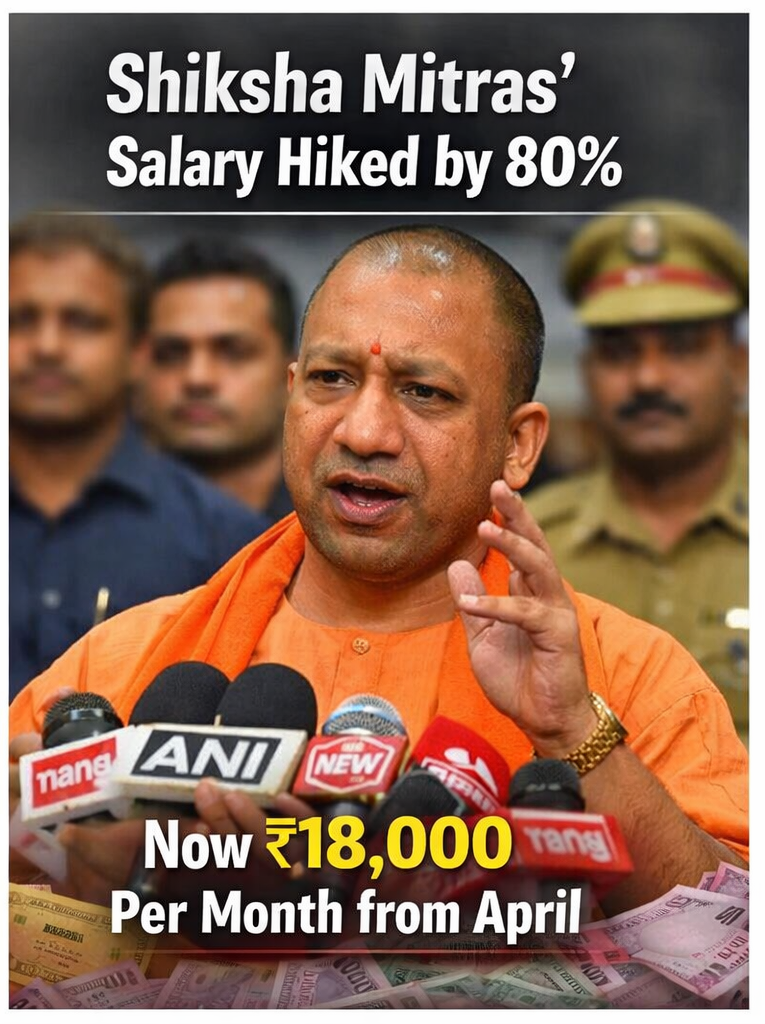
Some decisions don’t arrive with noise. They arrive quietly and sit with people for days before fully sinking in. The recent announcement that Shiksha Mitras in Uttar Pradesh will now earn ₹18,000 per month instead of ₹10,000 is one such decision. It didn’t create instant celebration. It created a pause. For many teachers, the first response was disbelief, followed by cautious relief.
The declaration, made by Yogi Adityanath, will take effect from April. On paper, it is an 80 percent increase. In real life, it alters how thousands of educators look at the months ahead.
What ₹10,000 Forced Teachers to Learn
Living on ₹10,000 taught Shiksha Mitras lessons they never signed up for. They learned how to delay needs. How to say “later” to necessities. How to smile in classrooms while anxiety followed them home.
The salary didn’t just limit spending; it limited choices. Teachers often adjusted their lives downward without complaint because speaking up felt pointless. Over time, that silence became routine. What should have felt temporary turned into a long-term condition.
Financial pressure doesn’t shout. It whispers every day.
Teaching While Carrying Personal Uncertainty
Standing in front of students requires emotional energy. That energy is harder to summon when personal life feels unstable. Many Shiksha Mitras taught with dedication, but not without cost. The worry about rent, medical bills, and family responsibilities never fully left their minds.
This constant background tension affects focus, not intention. The commitment was always there. The support was not. When educators are forced to operate under uncertainty, the system quietly absorbs that strain.
And students feel it, even if they don’t understand it.
Why ₹18,000 Changes Daily Decisions
The new salary figure doesn’t promise comfort, but it introduces control. That difference matters. With ₹18,000, expenses can be arranged instead of fought over. A medical issue becomes manageable. School fees no longer trigger panic.
This shift allows teachers to make decisions without fear, guiding every step. Planning replaces guessing. Stability replaces constant adjustment. These are small changes individually, but together they reshape everyday life.
A predictable income restores mental balance.

More Than Money, It Signals Acknowledgment
For years, Shiksha Mitras have worked with a sense that their role was essential yet undervalued. This increase speaks without speeches. It acknowledges effort through action.
Recognition doesn’t erase the past, but it alters the present. Feeling valued changes how people carry themselves. It restores pride that financial stress slowly erodes. Teachers who feel respected engage more deeply with their work.
Validation, when delayed, still matters.
April as a Turning Point, Not Just a Date
April is when academic calendars reset, and family budgets feel the most pressure. Introducing the revised salary at this time strengthens its impact. Teachers begin the new academic year with less financial anxiety and more clarity.
This matters in classrooms. A teacher entering a new session with stability approaches students differently. Patience improves. Attention sharpens. Energy levels rise.
Timing turns a decision into momentum.
What Happens Inside Homes First
Salary changes show their effects at home before anywhere else. With increased income, conversations change tone. Financial stress loosens its grip. Planning becomes possible.
Children sense calmer households. Partners share responsibility more evenly. Parents feel less burdened by concern for their children’s future. These are subtle changes, but they define the quality of life.
Policy reaches people through kitchens, not press notes.
Classrooms Benefit Without Realizing Why
Students may never know the reason, but they will feel the difference. Teachers who are less stressed are more present. Lessons become smoother. Engagement improves.
Reduced financial pressure also lowers the need for side work, keeping teachers focused on education. Retention improves. Experience stays within the system. These outcomes don’t happen overnight, but they build quietly.
Education systems improve when teachers are not exhausted by the demands of survival.
Hope, Balanced With Experience
Despite appreciation, many Shiksha Mitras remain watchful. Experience has taught them that announcements and execution don’t always align. Optimism exists, but it is measured.
The expectation now is consistency. Timely payments. Clear communication. Long-term stability. If these follow, trust can begin to rebuild.
Trust grows slowly, but it grows strongest when actions repeat.
Understanding the Weight of “80 Percent”
Calling this an 80 percent hike explains scale, not context. The original amount was unsustainably low. The increase doesn’t dramatically elevate lifestyles; it corrects the imbalance.
This change brings the profession closer to fairness. It allows teachers to meet basic needs with dignity. Sometimes, a large increase only looks large because the starting point was deeply flawed.
Correction often feels dramatic after long neglect.
A Signal for the Future
This decision sends a broader message. It suggests that long-standing issues can be addressed. That persistence matters. Those roles once treated as temporary deserve stability.
For Shiksha Mitras, this is not the final chapter. It is a shift in direction. One that moves the conversation away from survival and toward sustainability.
Strong systems depend on secure people.
Closing Reflection: Stability Is Its Own Reward
This salary revision is not a favor. It is a step toward balance. It recognizes that those shaping young minds deserve a stable life of their own.
From April onward, many Shiksha Mitras will wake up with less worry and more clarity. That quiet relief may never trend online, but it will shape classrooms across Uttar Pradesh.
And sometimes, quiet change is the most meaningful kind of change.