
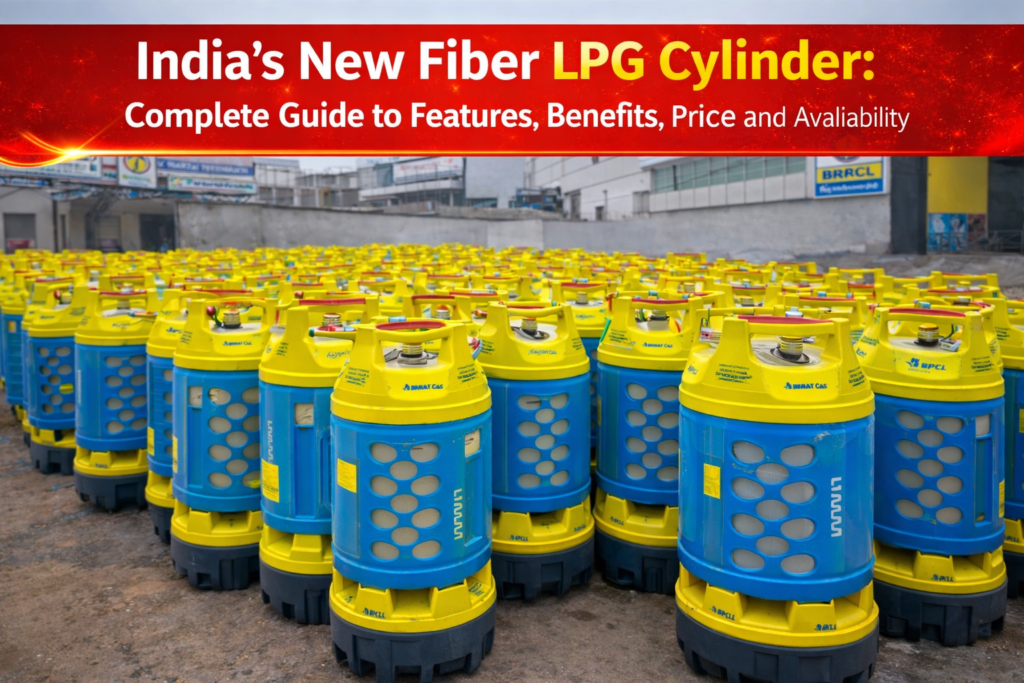

For decades, households across India have depended on the familiar red steel LPG cylinder. It has been a routine part of kitchen life, yet many people still remember how heavy and difficult it can be to lift or move. Recently, a modern alternative has started gaining attention — the fiber LPG composite cylinder.
This newer design represents a noticeable shift in how cooking gas cylinders are built. Instead of the traditional metal body, the new model uses advanced composite materials that make the cylinder lighter, safer, and easier to manage. As the idea slowly spreads to different cities, many households are beginning to ask whether this upgraded cylinder could eventually replace the old steel ones that have been around for years.
Latest LPG Gas Price Update in India
Learn more about composite LPG cylinders on the Bharat Petroleum official website
What Is a Fiber LPG Composite Cylinder?
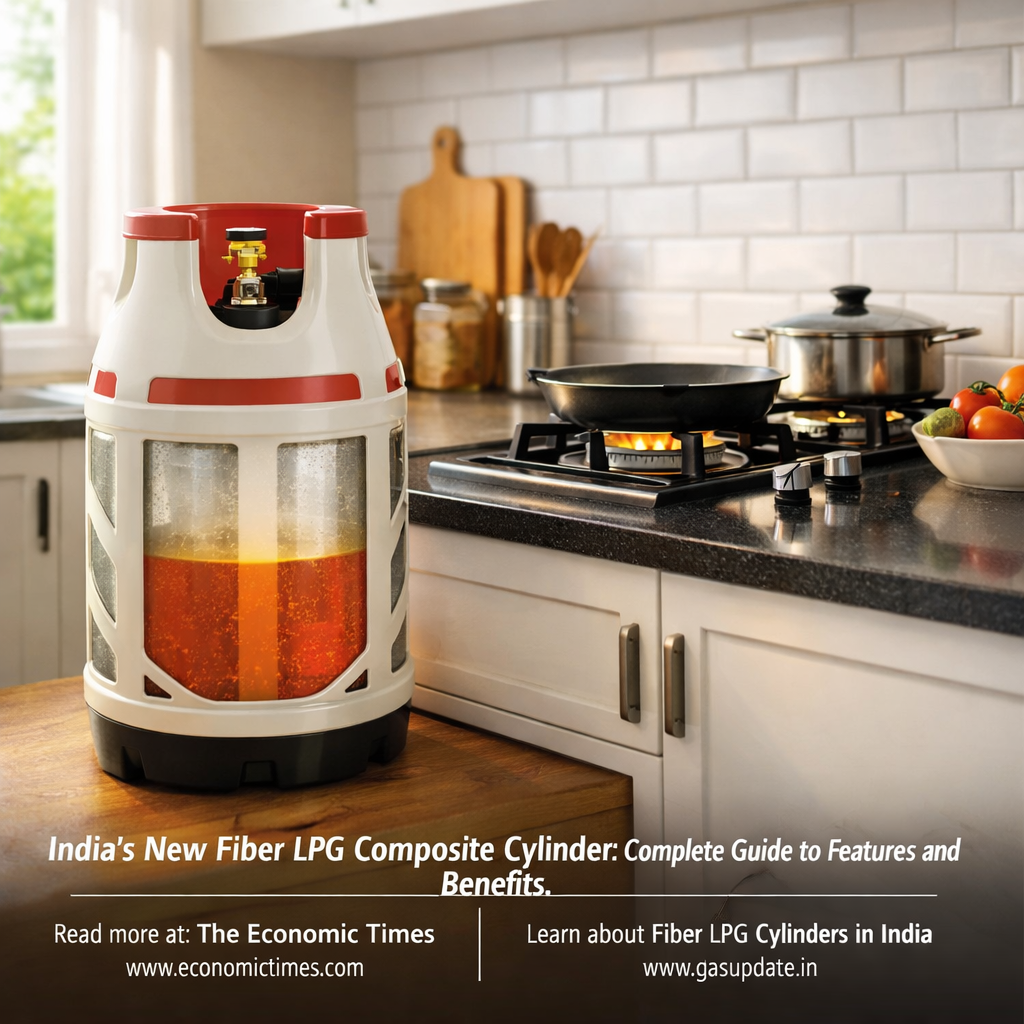
The fiber LPG composite cylinder is a modern version of the traditional cooking gas cylinder. Rather than using thick steel walls, manufacturers build it with layered composite materials that include fiberglass and high-strength polymers.
At first glance, the cylinder looks quite different from the standard red LPG container that most homes keep in their kitchens. The outer surface is often lighter in color and slightly transparent. This structure not only changes the appearance but also improves functionality.
Another interesting detail is how the layers work together. The inner container safely stores the gas, while the external composite frame provides strength and protection. Because of this layered design, the cylinder manages to stay strong without the excessive weight that people normally associate with LPG cylinders.
Why the New LPG Cylinder Design Is Different
The biggest difference lies in how the cylinder is constructed. Traditional cylinders rely entirely on metal thickness for durability. The composite version, on the other hand, combines several materials that distribute pressure more efficiently.
This design change may sound technical, but the impact becomes clear during everyday use. A steel cylinder tends to feel bulky even before it is filled with gas. In contrast, the composite cylinder feels noticeably lighter when lifted or moved.
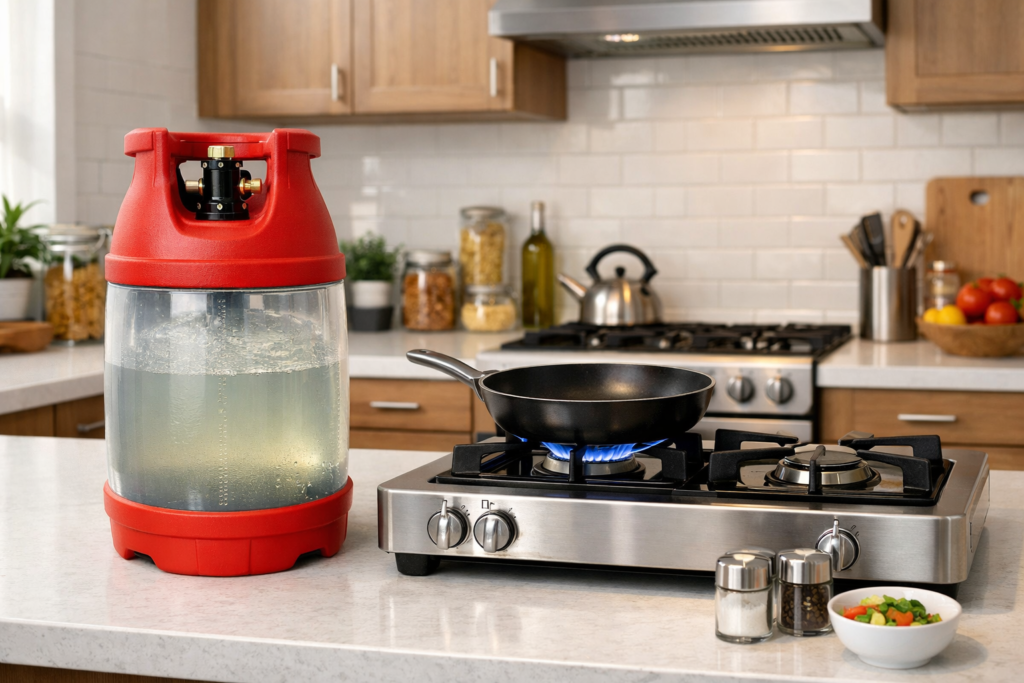
Another change appears in the outer shell. Instead of a solid opaque body, parts of the composite cylinder allow partial visibility. This small design tweak solves a problem that households have faced for years — guessing how much gas remains inside the cylinder.
Lightweight Structure Makes Handling Easier
Anyone who has tried shifting a full LPG cylinder knows how challenging it can be. The steel version weighs quite a lot even when empty, which makes lifting it a task many people prefer to avoid.
The fiber composite model addresses this problem directly. Because the material is lighter than steel, the overall weight drops significantly. This makes everyday handling far less difficult.
In many homes, the cylinder needs to be moved while cleaning the kitchen or replacing an empty one. With the composite cylinder, the process feels more manageable. Elderly users and people living alone may especially appreciate this improvement since it reduces the physical effort required.
Transparent Body Helps Check Gas Level
One of the most frustrating moments in any kitchen happens when the gas suddenly runs out in the middle of cooking. Usually, people only realize the cylinder is empty when the flame disappears.
The composite cylinder changes that experience through its semi-transparent body. Because the outer layer allows visibility, users can see the approximate gas level inside the cylinder.
This feature eliminates the need for guesswork. Instead of shaking the cylinder or estimating the remaining gas, users can quickly look at the body and get an idea of how much fuel remains. It might sound like a small improvement, yet it solves a long-standing inconvenience for millions of households.
Safety Features of Composite LPG Cylinders
Safety has always been a major concern with LPG storage. Gas cylinders must handle pressure, heat, and everyday handling without posing risks. The composite cylinder design focuses heavily on improving these safety aspects.
Unlike metal cylinders that can develop weak spots over time, composite materials distribute pressure evenly across the structure. This reduces the chance of sudden failure due to corrosion or metal fatigue.
Another advantage appears in extreme situations. In the rare event of exposure to high heat, composite cylinders behave differently from steel ones. Instead of exploding under pressure, the material gradually releases gas through controlled melting points. This controlled behavior helps lower the risk of dangerous accidents.
Rust Resistance and Longer Lifespan
Many households have seen old LPG cylinders develop rust marks after years of use. Since steel reacts with moisture and air, corrosion becomes difficult to avoid, especially in humid environments.
The composite cylinder eliminates this issue because its materials do not rust. The fiberglass and polymer layers remain unaffected by moisture, making them far more resistant to environmental damage.
Over time, this resistance may help extend the usable life of the cylinder. Instead of dealing with surface corrosion or repainting, the composite body remains structurally stable for a longer period. For gas distributors, this durability could also reduce maintenance and replacement costs.
Environmental Benefits of Fiber LPG Cylinders
Beyond convenience and safety, the composite cylinder also introduces environmental advantages. The manufacturing process often requires less raw metal, which reduces the demand for heavy steel production.
In addition, the lighter weight of the cylinder helps during transportation. Delivery vehicles carrying LPG cylinders consume fuel, and heavier loads increase fuel usage. Because composite cylinders weigh less, transport efficiency improves slightly.
Another positive aspect relates to recyclability. Many composite materials used in these cylinders can be processed and reused at the end of their lifecycle. While the environmental impact may not be immediately visible to consumers, the shift toward lighter materials contributes to a more sustainable system over time.
Where Fiber LPG Cylinders Are Available in India
The new fiber LPG cylinders are gradually appearing in selected regions across India. Initially, they were introduced through pilot programs to test how consumers respond to the updated design.
Major gas distribution companies such as Indian Oil Corporation and Hindustan Petroleum have been exploring the rollout of composite cylinders in certain cities. These trials help determine whether the cylinders perform well under regular household conditions.
Availability may still vary by region. Some urban areas have already begun offering these cylinders to customers, while other locations may see them introduced later as production and distribution expand.
Expected Price of Composite LPG Cylinders
When people hear about a new technology, the first question usually concerns price. Composite LPG cylinders are expected to cost more than traditional steel cylinders, mainly because of the advanced materials used in their construction.
However, the price difference may gradually decrease as manufacturing scales up. When new products first enter the market, production costs are often higher. As demand grows and factories produce larger quantities, prices typically become more competitive.
Even if the initial cost appears slightly higher, many users may consider the benefits worth it. Features such as lower weight, gas-level visibility, and improved durability could make the cylinder more practical for daily use.
Future of LPG Cylinder Technology in India
The arrival of fiber LPG cylinders signals a broader shift in how everyday household equipment is designed. Instead of relying only on traditional metal containers, manufacturers are now exploring materials that improve usability, safety, and sustainability.
In the coming years, these cylinders could become more common as production increases and distribution networks expand. If consumer response remains positive, the composite design may gradually replace older steel cylinders in many households.
For now, the fiber LPG cylinder stands as an example of how even a familiar kitchen object can evolve with modern technology. A simple redesign — lighter materials, visible gas levels, and improved safety — may quietly transform the daily cooking experience for millions of families across the country.
FAQ Section
What is a fiber LPG cylinder?
A fiber LPG cylinder is a gas container made using composite materials instead of steel, making it lighter and partially transparent.
Is the new LPG composite cylinder safe?
Yes, composite LPG cylinders are designed with multiple protective layers and undergo strict safety testing.
Can we see the gas level in the new cylinder?
Yes, the cylinder body is partially transparent, allowing users to easily check the remaining LPG level.
When will fiber LPG cylinders be available across India?
Currently, these cylinders are being introduced in selected areas, and wider availability is expected gradually.
Is the fiber LPG cylinder lighter than a steel cylinder?
Yes, composite cylinders weigh significantly less than traditional steel LPG cylinders.



Pingback: LPG Cylinder Booking Rules 2026 Update: What Changed? -