

When a T20 match swings, it rarely does so politely. It jerks. It surprises. It punishes one bad over and rewards one brave partnership. That is exactly what happened in SRH vs LSG, where Lucknow Super Giants chased down 157 and beat Sunrisers Hyderabad by 5 wickets, finishing at 160/5 in 19.5 overs after SRH posted 156/9. The scoreboard may look tight, but the real story sits inside the match’s hidden pressure points.
If you watched this one ball by ball, you know the result was not decided by one six in the last over. It was decided much earlier — through momentum breaks, small collapses, smart recovery batting, and one captain’s calm knock under pressure. In this article, we’ll break down the 7 biggest turning points in SRH vs LSG, including who scored how many runs, which moments changed the direction, and why the final result slipped away from Hyderabad.

KKR vs PBKS IPL 2026: 7 Moments That Could Turn the Match Upside Down
SRH vs LSG IPL 2026 Official Website
SRH Started Like a Team Ready to Explode — Then Suddenly Stopped
Sunrisers Hyderabad did not begin this innings like a side planning for 156. Their batting approach had intent. The early overs hinted at another aggressive SRH outing, the kind where they try to blow the game open before the bowling side settles.
But that rhythm did not survive.
Instead of one long attacking phase, SRH kept losing control in pieces. The innings never truly flowed for 20 overs. Every time it felt like Hyderabad might accelerate, another wicket or slowdown arrived. That stop-start pattern became the first silent turning point of the game.
In T20 cricket, teams don’t always lose because they collapse completely. Sometimes they lose because they never fully take off.
Early Wickets Pushed SRH Into Repair Mode
This was the first proper crack in the innings. SRH lost wickets early enough to change the mood of the dugout. Once a batting side shifts from “attack” to “recover,” the fielding side gains emotional control — and LSG grabbed it.
That is what made the middle phase so important. Hyderabad was no longer playing free cricket. They were managing damage.
And that matters because SRH are built to intimidate. The moment they stop scaring the opposition, the contest becomes more even.
LSG didn’t need a dramatic spell here. They simply kept asking questions. And SRH, instead of dominating, were forced to answer them.
Heinrich Klaasen’s 62 Saved SRH From a Worse Collapse
If one innings stopped SRH from falling apart completely, it came from Heinrich Klaasen, who scored 62 runs. This was not one of those easy half-centuries where the platform is already set, and the batter cashes in. This knock had actual responsibility in it.
Klaasen did what good T20 middle-order players do when the top order misfires — he rebuilt without making the innings feel dead. He absorbed the pressure, rotated enough, and still found ways to keep SRH alive.
His innings mattered for two reasons:
- He gave Hyderabad something defendable.
- He delayed LSG’s complete control of the game.
Without Klaasen’s 62, this match may have ended far more comfortably for Lucknow.
But here’s the brutal part: a rescue act only becomes match-winning if someone converts it into a finishing assault. That never fully happened.
Nitish Kumar Reddy’s 56 Added Hope — But Not Enough Fear
Alongside Klaasen, Nitish Kumar Reddy scored 56, and together they stitched the partnership that pulled SRH back into the game. In many ways, this stand was Hyderabad’s best batting phase. It gave the innings shape after early uncertainty and prevented a total collapse.
This was smart batting, not reckless batting.
Nitish’s contribution was valuable because he didn’t try to manufacture a miracle every ball. He played the situation, found tempo, and gave Klaasen support. That kind of innings often goes underappreciated because it doesn’t always arrive with chaos and highlight-reel shots.
Still, there was one problem.
A recovery partnership is useful. A match-defining launch is different.
SRH recovered, yes. But they didn’t leave LSG with scoreboard panic. That difference is everything in IPL cricket.
SRH Finished on 156/9 — And That Total Always Felt 15–20 Runs Short
Let’s be honest: 156/9 was never going to feel fully safe on this surface unless SRH bowled almost perfectly. That final total was the fourth and perhaps biggest structural turning point of the match.
When a team is rescued by middle-order knocks, the last few overs become the real exam.
SRH needed a stronger finish. Instead of exploding late, they leaked momentum. That meant the hard work of Klaasen and Nitish did not receive the ending it deserved.
A total in the 170-plus zone would have changed the entire chase. At 156, LSG entered the second innings knowing:
- One set batter could control the game,
- The required rate would stay manageable,
- And panic would only come if wickets fell in clusters.
That is a very comfortable mental position for a chasing team.
Mohammed Shami’s Early Strike Gave SRH a Real Opening
Now this is where Hyderabad had its chance.
Mohammed Shami struck early, and for a brief stretch, SRH had the chase exactly where they wanted it. The stadium energy shifted. LSG were not cruising. They were being tested. Even the body language suggested Hyderabad believed they had found the doorway back into the game.
This moment was massive because low-scoring defenses depend on early wickets. SRH got one. They may even have sensed a mini-collapse.
But T20 matches are cruel like that. You can create pressure and still fail to cash it in.
And that is exactly what happened next.
Rishabh Pant’s 68 Became the Knock That Rewrote the Match
This was the innings that decided everything.
Rishabh Pant scored 68 off 50 balls, and while that strike rate may not scream destruction, the innings itself was priceless because it gave LSG balance, calm, and scoreboard continuity.
Pant did not need to produce madness. He needed to survive the storm, control the chase, and ensure SRH never got three or four wickets in a burst. He did exactly that.
What made his knock special was not just the number 68. It was the timing of his control.
He held one end when SRH were trying to squeeze.
He prevented the asking rate from climbing.
He made Hyderabad bowl at him again and again.
That is how chases are stolen — not always with fireworks, but with refusal.
For a captain under pressure after a rough start to the season, this was a statement innings. Not flashy. Just deeply important.
LSG Held Their Nerve Better in the Final Phase
The last phase of the chase told the truth about the game.
Even when SRH dragged the contest deep, LSG never fully lost composure. They kept the equation alive, stayed within touching distance, and crossed the line with one ball to spare at 160/5 in 19.5 overs.
That finishing discipline separated the two teams.
Because when you compare both innings side by side, the difference becomes obvious:
- SRH had recovery, but not enough finish
- LSG had pressure, but also enough control
That is often the entire difference in T20 cricket.
Hyderabad was not blown away. They were edged out by a side that handled the critical overs better.
Who Scored How Many Runs in the Main Turning Moments?
Here are the biggest batting contributions that shaped the match:
- Heinrich Klaasen – 62 runs for SRH
- Nitish Kumar Reddy – 56 runs for SRH
- Rishabh Pant – 68 runs off 50 balls for LSG
These were not just “top scores.” These were the innings around which the entire match rotated.
If you remove Klaasen and Nitish, SRH probably don’t even reach a competitive total.
If you remove Pant, LSG likely loses its grip during the chase.
That is why scorecards can be deceptive. Numbers tell you who scored. Context tells you who changed the match.
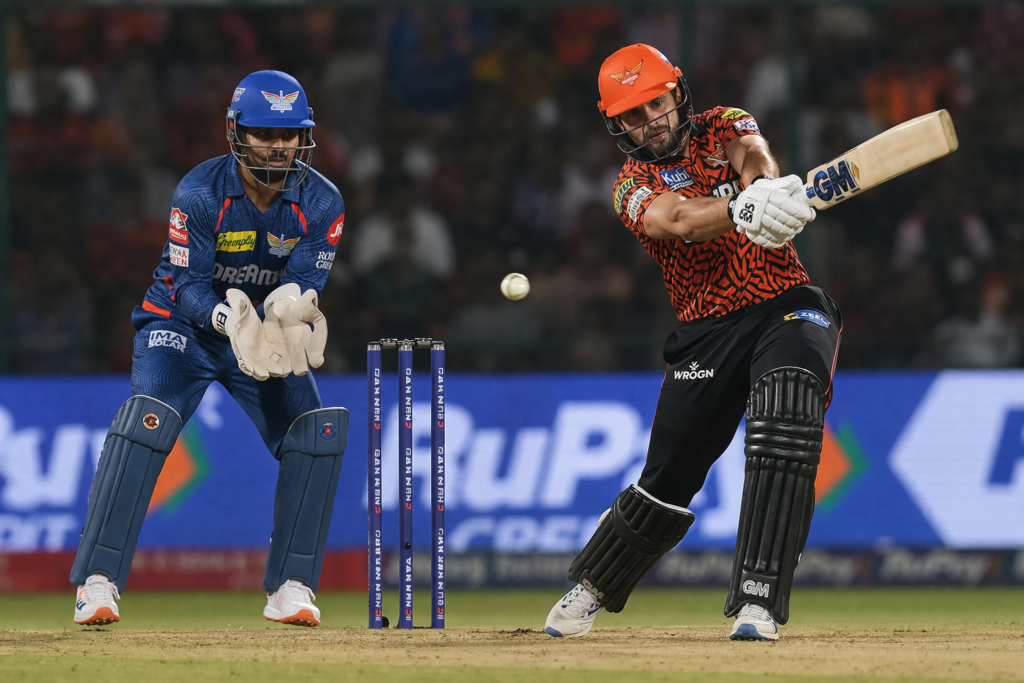
Why SRH Lost Despite Fighting Hard
This defeat will sting SRH because it was not a one-sided failure. They were in the contest. They had moments. They created pressure. But the match slipped because of three hard truths:
1. Their batting never fully capitalized
They had a recovery, but not a launch.
2. 156 was always a nervous total
Competitive, yes. Commanding, no.
3. They couldn’t remove Pant early enough
And once he settled, the chase belonged to LSG more than the scoreboard suggested.
That is what makes this loss frustrating. It was not about being poor throughout. It was about being slightly second-best in the decisive pockets.
What This Win Means for LSG
For Lucknow Super Giants, this win means more than two points.
They came into this match needing stability after an underwhelming batting display in their previous outing, where they were bowled out for 141 against the Delhi Capitals. This chase, especially through Pant’s composed innings, should settle nerves in that dressing room.
LSG won this game not by looking invincible, but by looking more mature when the pressure thickened.
That is a very useful sign early in a tournament.
Conclusion: SRH vs LSG Was Decided by Control, Not Chaos
SRH vs LSG will be remembered as a match where the result was shaped less by one giant explosion and more by a chain of pressure moments.
Yes, the headline will say LSG beat SRH by 5 wickets.
But underneath that simple line sat the real match story:
- SRH lost early momentum
- Klaasen (62) and Nitish (56) rescued the innings
- 156/9 left them vulnerable
- Shami gave them hope
- Pant’s 68 held LSG together
- Lucknow finished with better nerves
That is why this was not just another IPL scorecard. It was a reminder that in T20 cricket, the team that manages the middle and late moments better usually walks away smiling.
And on this night, that team was the Lucknow Super Giants.
FAQ
Who won the SRH vs LSG match?
Lucknow Super Giants (LSG) won the SRH vs LSG match by 5 wickets after successfully chasing 157.
What was the final score in SRH vs LSG?
Sunrisers Hyderabad (SRH) scored 156/9, while Lucknow Super Giants (LSG) finished at 160/5 in 19.5 overs.
Who scored the most runs in SRH vs LSG?
Rishabh Pant was the top scorer for LSG with 68 runs, while Heinrich Klaasen scored 62 and Nitish Kumar Reddy made 56 for SRH.
What were the biggest turning points in SRH vs LSG?
The biggest turning points included SRH’s early wickets, Klaasen’s rescue innings, Nitish Kumar Reddy’s support knock, SRH’s below-par total, Shami’s early breakthrough, Pant’s 68, and LSG’s calm finish.
Why did SRH lose to LSG?
SRH lost because they failed to post a stronger total, lost momentum in key overs, and could not dismiss Rishabh Pant early during the chase.
Was 156 a low total for SRH against LSG?
Yes, 156 was competitive but slightly below par, especially against a batting lineup capable of chasing under pressure.
Who played the most important innings in SRH vs LSG?
Rishabh Pant’s 68 was the most important innings because it stabilized the chase and prevented SRH from taking control.
Which SRH batters played well against LSG?
Heinrich Klaasen and Nitish Kumar Reddy were the standout batters for SRH with important half-centuries.